

Getting Started with Repstance in Microsoft Azure
In Azure the Repstance Server is delivered as a pre-built virtual machine. It requires you to have your own Azure account and be subscribed to Repstance, and then to select an instance of sufficient size and processing power for your database requirements (see the vendor-recommended instance size). The Marketplace lists the two editions separately; see GETTING STARTED WITH REPSTANCE for the difference.
Select an edition
Go to the Azure Marketplace:
https://marketplace.microsoft.com/en-us/marketplace/apps?exp=ubp8&search=collabcloud
- Select Repstance Edition. Both editions are listed:
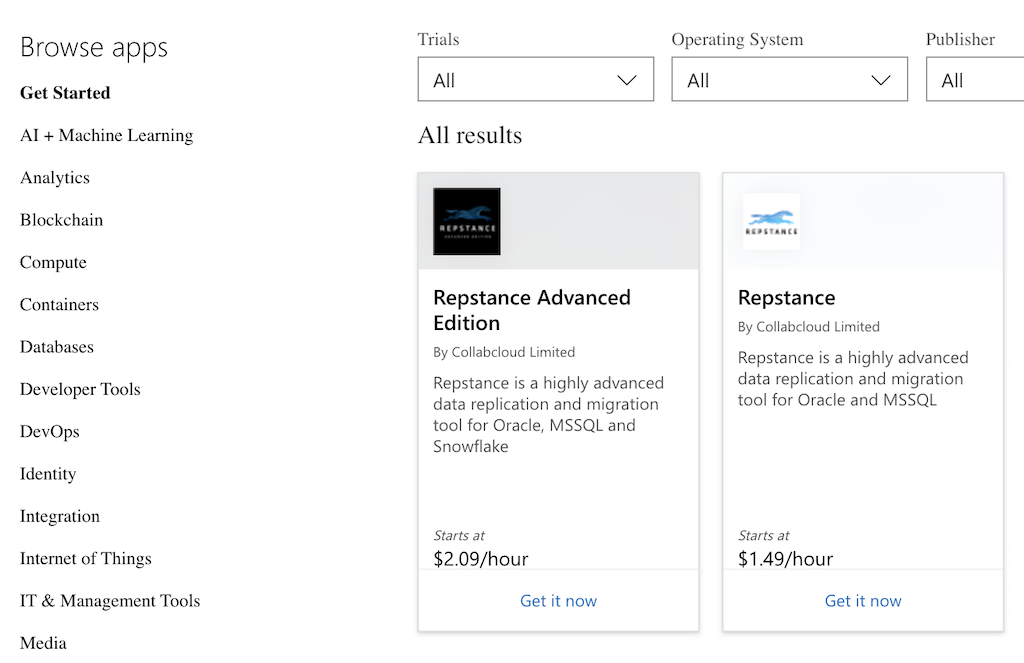
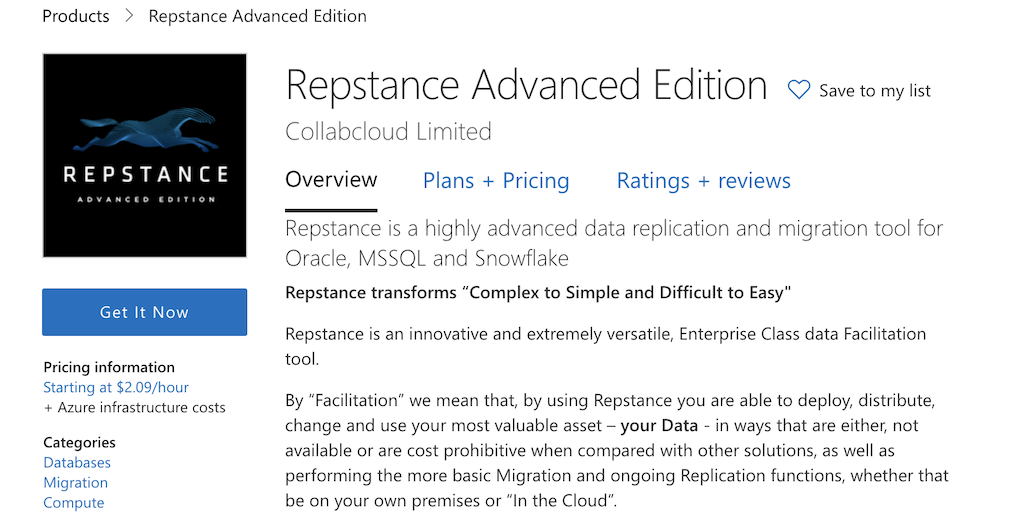
- Click “Get It Now”
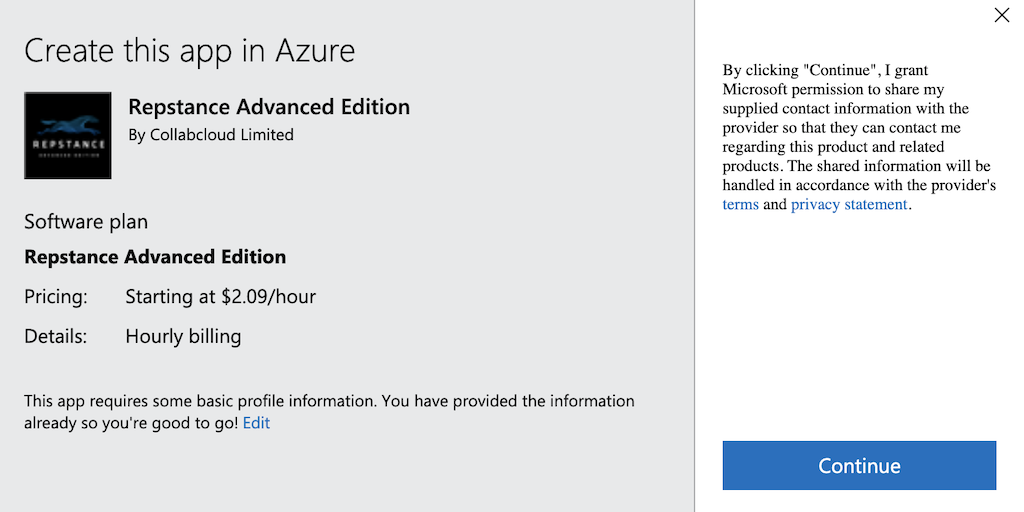
- Click “Continue”
- Click “Create” to launch Repstance
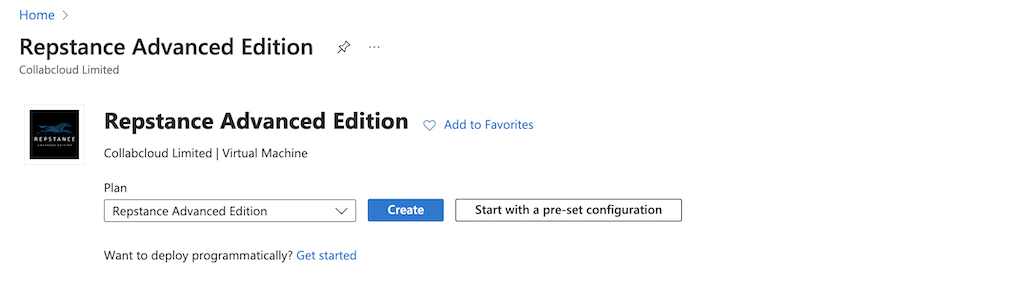
Configure and launch the instance
- Provide instance configuration. Ensure that TCP port “22” is opened for SSH access and, if you need the Repstance Web User Interface (Web UI), that port “3000” is also opened. Click “Continue to Launch”
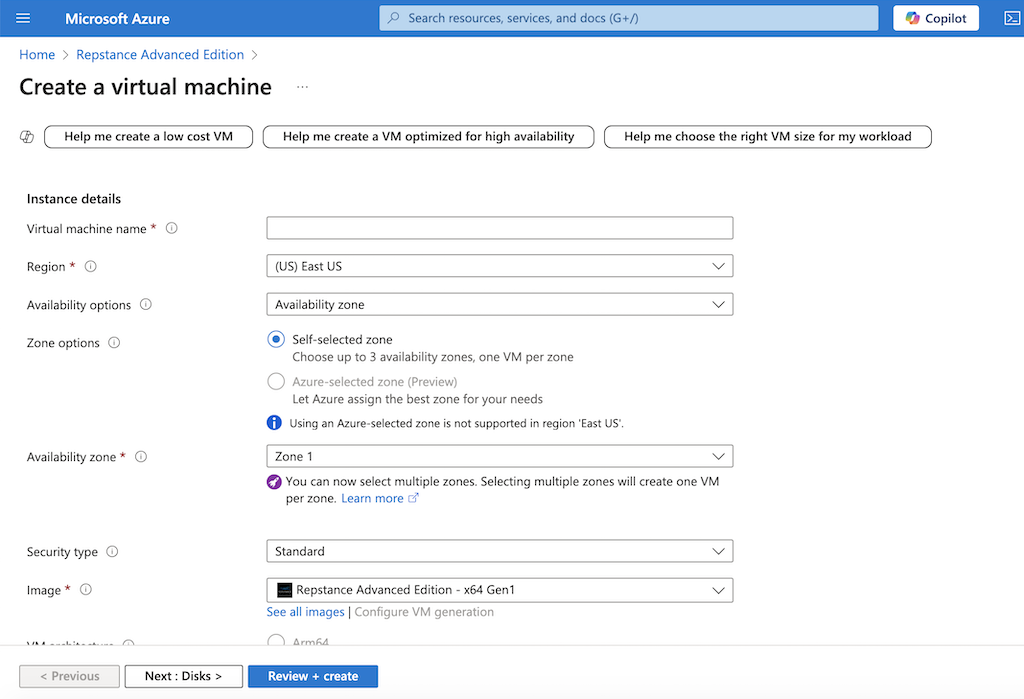
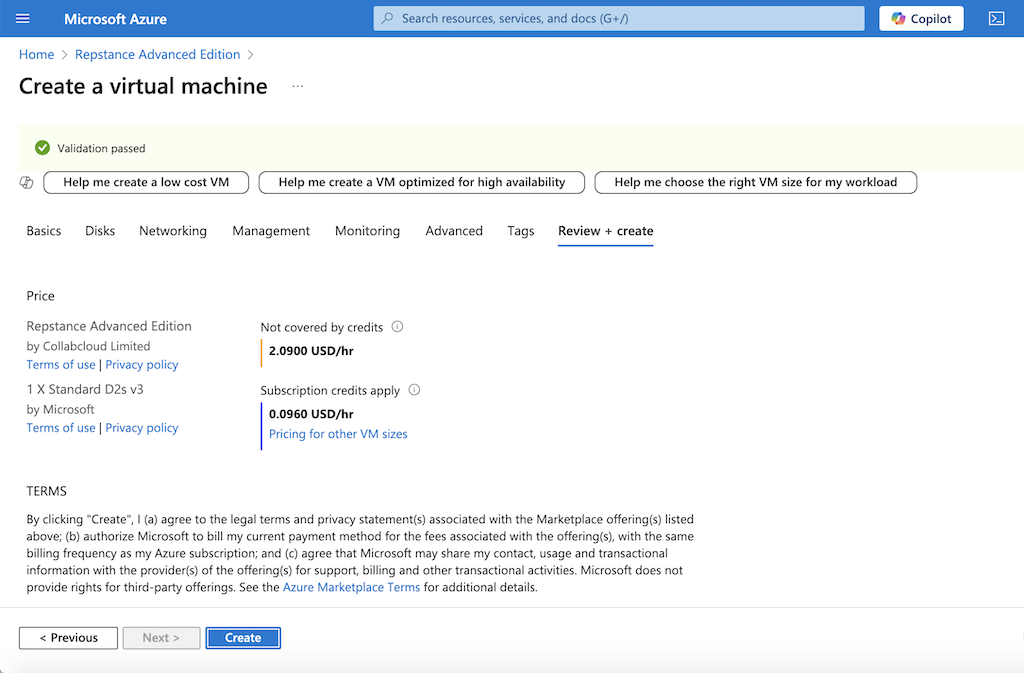
- Once the validation has passed click “Create”
Connect and log in
To connect to the operating system, use the SSH protocol with the credentials that were provided during the instance deployment process.
To use the Repstance Web UI open the following address in a web browser:
https://HostName:3000/
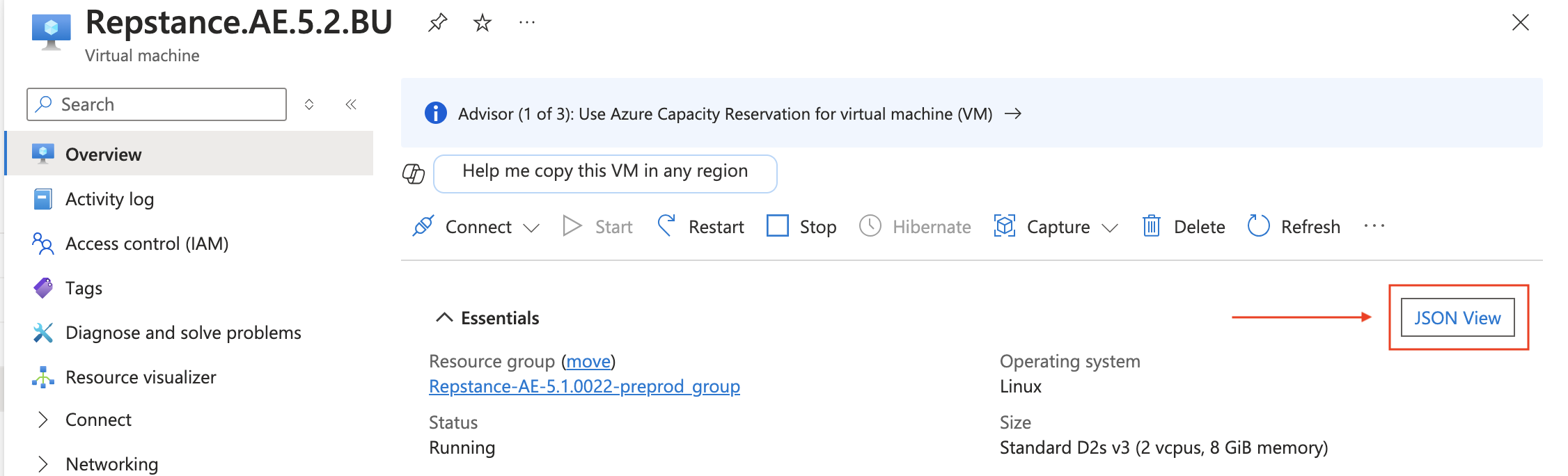
For the first login use “repstance” as the user name and “vmId” as the password. To find the “vmId”, click on the Repstance virtual machine and, under the “Overview” tab, click “JSON View”:
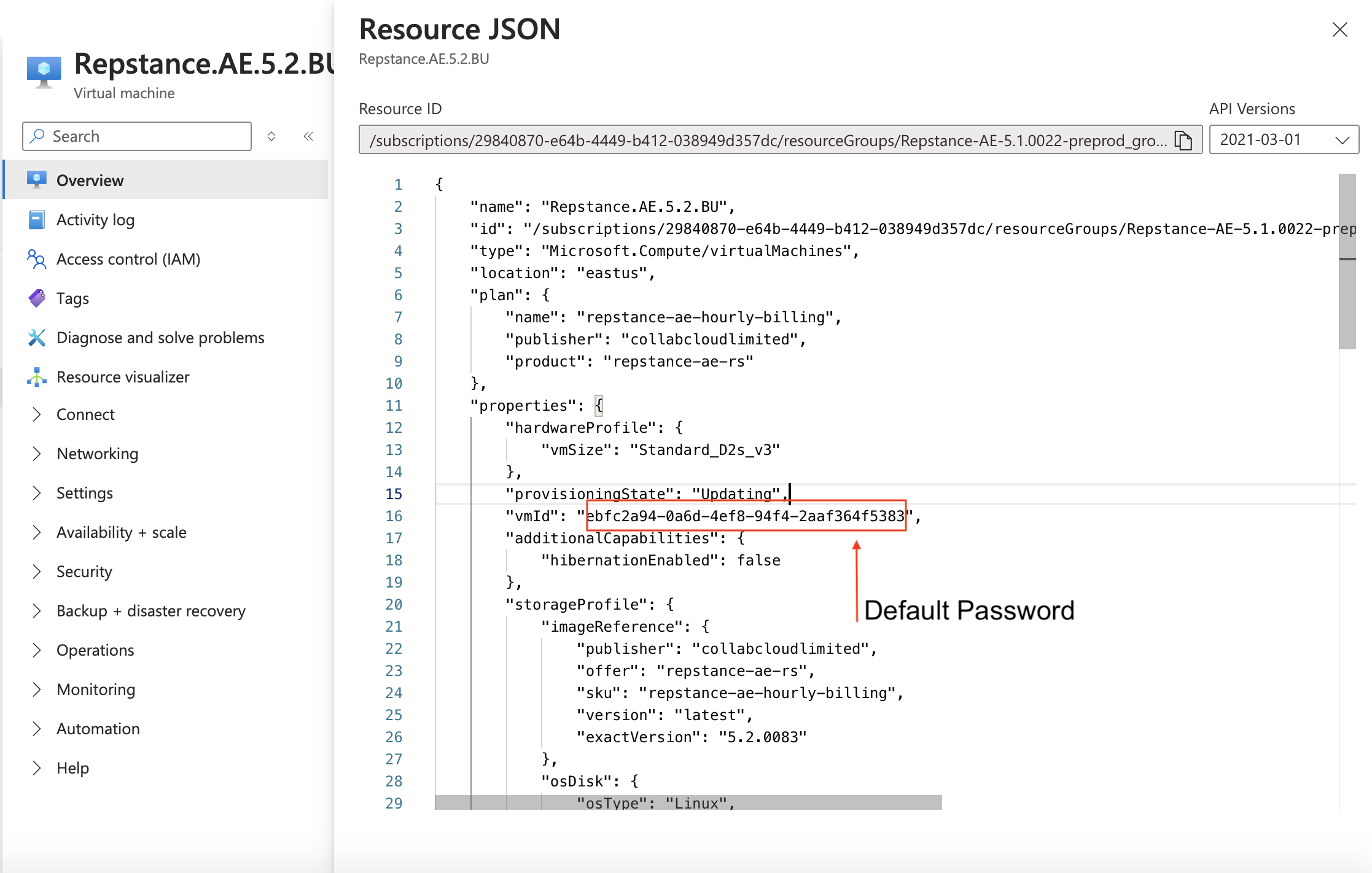
The JSON contains a “vmId” element, which is your default password:
Alternatively, find the “vmId” by logging in to the Repstance Server with SSH and running:
sudo cat /opt/repstance/conf/repstance.conf | grep token | sed 's/token=//'The command output:

It is recommended to change the default password after the first login (see Web User Interface (Web UI)).
Once it is installed, it is ready to run. To reach it with repcli or the REST API from another computer, instead of only on the server itself, open port 8797 and see Configure repcli for Remote Access.
- Repstance User Guide
- ABOUT REPSTANCE
- SUPPORTED DATABASE REQUIREMENTS
- INTERACTING WITH REPSTANCE SERVER
- CONFIGURE REPLICATION WITH REPSTANCE
- DATABASE CONFIGURATION COMMANDS
- PROCESS CONFIGURATION COMMANDS
- PROCESS CONTROL COMMANDS
- DATA COMPARISON
- REPSTANCE WEB USER INTERFACE
- REPSTANCE SERVER MAINTENANCE
- MONITORING WITH AMAZON CLOUDWATCH
- MONITORING WITH AZURE MONITOR
- TROUBLESHOOTING AND FAQ
- GLOSSARY